
 Workplace Management
24 September 2026
Best Workplace Management Software in 2026: 6 Tools Compared
Compare six workplace management platforms. See what each is suited for and how to choose the right fit in 2026.

Deesha
|
4 Min Read
Read More

Key Takeaways
Effective Scheduling Aligns Workforce with Business Needs – By matching employee availability and skills with shift demands, scheduling ensures the right people are in the right place at the right time, boosting productivity and operational efficiency.
Smart Scheduling Reduces Costs and Enhances Compliance – Properly managed schedules help control labor costs by avoiding overstaffing and excessive overtime while ensuring adherence to labor laws and regulatory requirements.
Employee Satisfaction Improves with Predictability and Flexibility – When employees have clear, fair schedules and input into their shifts, it leads to higher engagement, reduced stress, and lower turnover.
In today’s dynamic work environment, employee scheduling is more than just creating a roster, it’s a strategic function that impacts operational efficiency, labor costs, compliance, and employee satisfaction. Whether you’re managing a retail floor, a hospital, or a hybrid team, effective scheduling is essential for ensuring your business runs smoothly and your employees remain engaged.
In this guide, we’ll break down what employee scheduling is, why it matters, and how to do it right, with practical tips and best practices for success.
Employee scheduling is the process of assigning shifts, tasks, and responsibilities to employees. It involves coordinating availability, skill sets, business demand, and legal requirements to build an efficient and fair work schedule.
Shift assignment: Determining who works when and where.
Skill-task alignment: Matching the right employee to the right job.
Availability management: Considering time-off requests, availability, and preferences.
Compliance assurance: Adhering to labor laws, break policies, and overtime regulations.
A well-planned schedule ensures that the right number of employees with the appropriate skills are working when needed—minimizing downtime and optimizing team output.
By preventing overstaffing and unnecessary overtime, scheduling helps control payroll expenses without compromising service levels.
Transparent, predictable schedules that respect employee availability lead to higher morale, lower stress, and reduced turnover.
Proper staffing ensures customers are attended to quickly and efficiently, especially in industries like retail, hospitality, and healthcare.
Scheduling with compliance in mind helps avoid legal risks associated with overtime, breaks, and maximum working hours.
Read More about: Employee Scheduling Software vs Resource Scheduling Software
Find out how optimized employee scheduling improves productivity, morale, and bottom lines.
Even the best organizations struggle with:
Last-minute shift changes or call-outs
Balancing fairness with business needs
Managing availability across large teams
Integrating remote and on-site staff
Compliance with local labor laws
These challenges make manual scheduling inefficient, and in many cases, risky.
Investing in employee scheduling software like When I Work, Deputy, Homebase, or Shiftboard helps automate scheduling, reduce errors, and provide visibility to managers and employees alike.
Make schedules easily accessible via mobile apps or internal dashboards. Notify employees of changes in advance and encourage open feedback.
Use historical data and forecasting tools to match staffing levels to busy and slow periods, particularly useful for retail, restaurants, and seasonal businesses.
Whenever possible, honor employee shift preferences, availability, and time-off requests. This builds trust and reduces scheduling conflicts.
Understand local regulations around work hours, breaks, minors, and overtime. Many scheduling tools offer built-in compliance alerts to avoid violations.
Train team members across roles to allow more scheduling flexibility and reduce disruptions during absences.
WorkInSync helps you manage shifts, availability, and workload, all from one seamless platform.
Optimized workforce management
Lower operational costs
Happier and more engaged employees
Higher productivity and better customer outcomes
Reduced legal risk and regulatory compliance
Bonus Read: Benefits of Employee Scheduling Software
Business Function | Impact of Effective Scheduling |
|---|---|
HR | Improves employee experience and reduces churn |
Operations | Ensures smooth workflows and coverage |
Finance | Controls payroll costs and overtime |
Customer Service | Guarantees timely service and better outcomes |
Employee scheduling is no longer just an administrative task, it’s a strategic lever for business success. By combining technology, thoughtful planning, and employee-centric policies, organizations can build schedules that work for both the business and its people.
Whether you’re managing hourly staff, a hybrid team, or a global workforce, investing in smarter scheduling pays off in productivity, morale, and bottom-line impact.
Transform your workplace operations with comprehensive solutions including desk booking systems for flexible seating, meeting room booking platforms for efficient space utilization, visitor management tools for secure guest experiences, and parking management solutions that optimize facility resources and enhance employee convenience. |
 Workplace Management
24 September 2026
Compare six workplace management platforms. See what each is suited for and how to choose the right fit in 2026.
Deesha
|
4 Min Read
Read More
 Announcement
13 August 2026
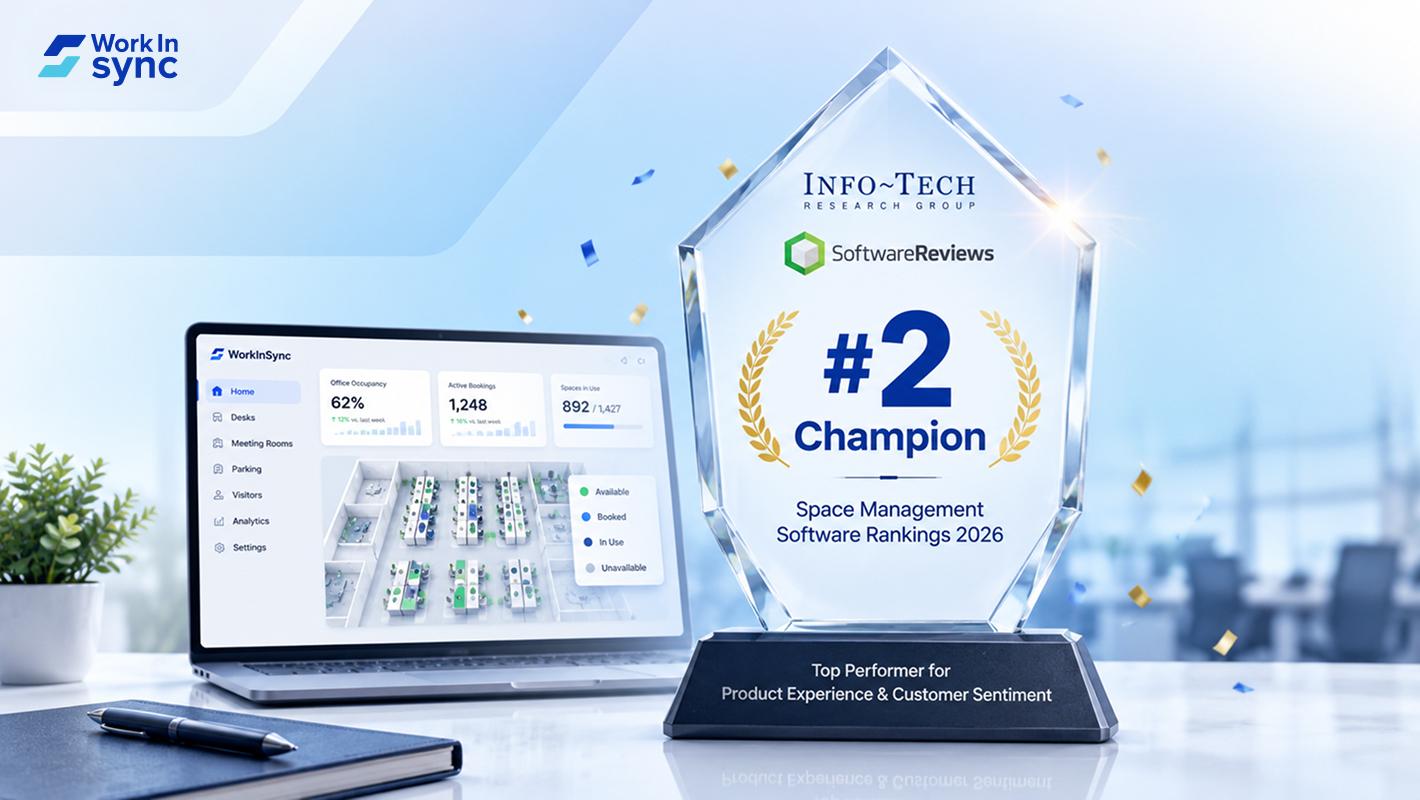
WorkInSync has been recognized by Info-Tech Research Group as a Champion in the 2026 Data Quadrant for Space Management, ranking #2, and as a Champion in the Emotional Footprint, ranking #2. Both awards are published on SoftwareReviews, Info-Tech's ratings platform, where rankings are built entirely from user feedback.

Sai Riddi
|
2 Min Read
Read More
 Desk Booking Software
5 June 2026
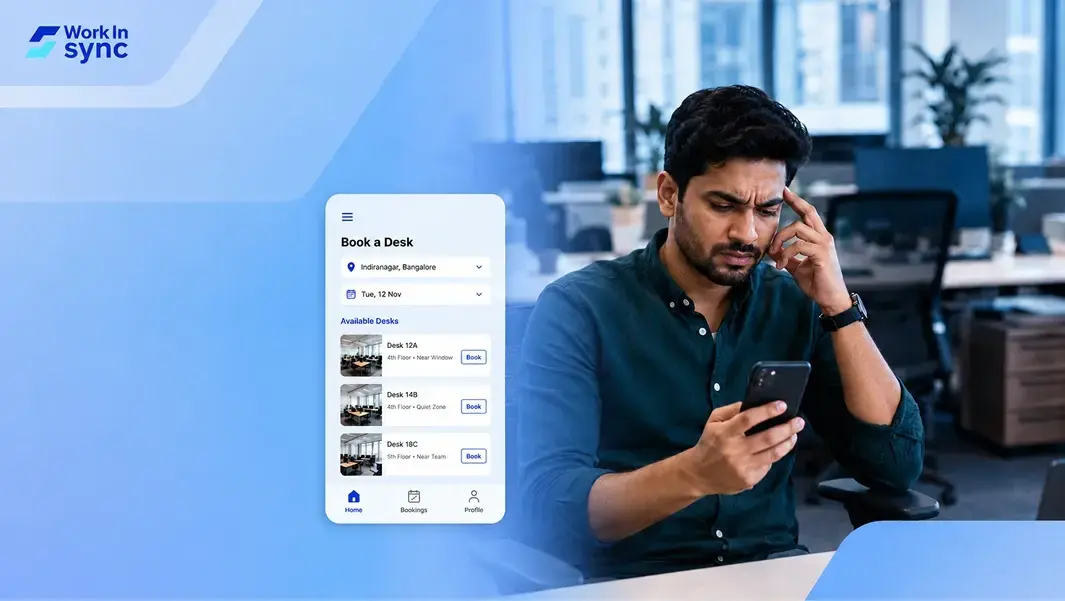
Let’s not pretend otherwise. Somewhere in your organization, a well-meaning IT or facilities team rolled out a desk booking system. There was a demo. Someone said “seamless.” There may have been a slide with the word “frictionless” on it. Leadership nodded. Procurement signed off. And then employees quietly went back to texting each other on […]
Ujjwal Trivedi
|
6 Min Read
Read More